




 한국어
한국어
 English
 简体中文
简体中文
 日本語
日本語
 Tiếng Việt
 ខ្មែរ
ខ្មែរ
How to modify patterns by body type #3. Correction of body types with severe curves in the back and waist area
If there are wrinkles at the back of a skirt or trousers, or if the back of a jacket is too loose, it can be very unsightly.
Here's an easy way to adjust the pattern to fit your body.
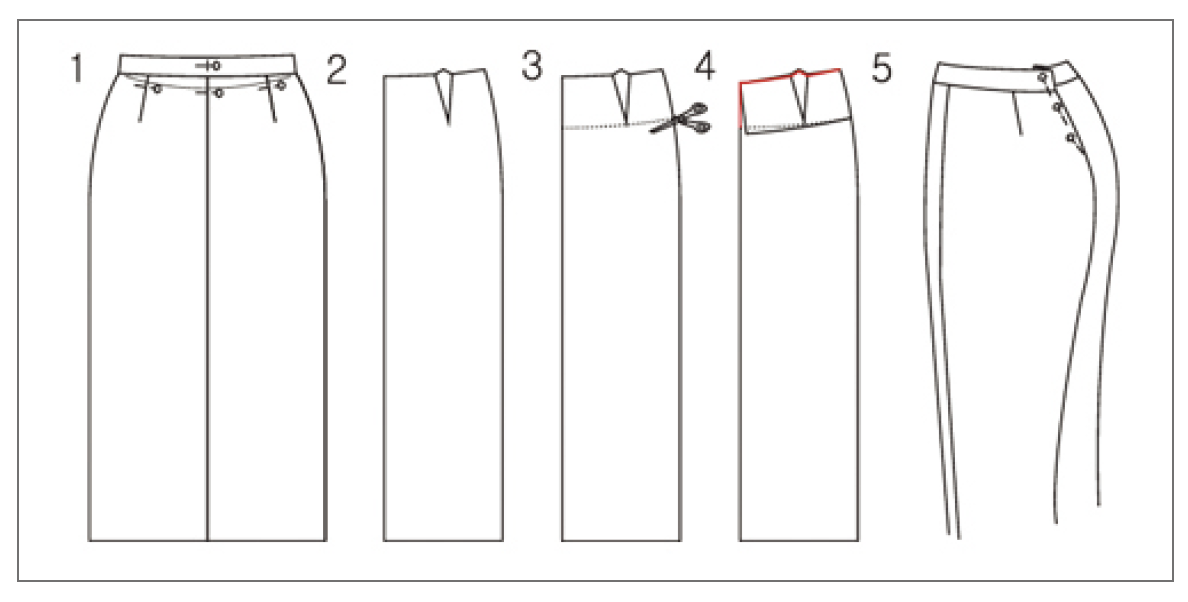
Skirt Correction: If there are any remaining wrinkles under the back waistband, pin the remaining part from the back center line to the side line to check, then lower the excess amount and mark the skirt waistline with a line tape. Resew the waistbands at the marked location to correct. If the curve of the back and waist is not severe, lower the back center by about 1cm and gently connect the waistline to the side line to correct.
If the curve of the back and waist is severe and there is a lot of excess volume at the waist of the back skirt as in <Figure 1>, draw a horizontal cut line at the end of the dart as in <Figure 3> on the pattern of <Figure 2>. If you overlap the excess volume while cutting the dart and the horizontal cut line and aligning it with the back center line as in <Figure 4>, there will be no extra space in the back waist. Naturally re-correct the dart line and the side hip curve.
Trouser adjustment: Adjust the back waist of the trousers as described in the skirt. Reduce the back center seam line on the waistline by about 0.5 to 1 cm and naturally adjust the back center seam line. (Note: It is recommended to adjust the waistband and back center seam line by basting before sewing.)
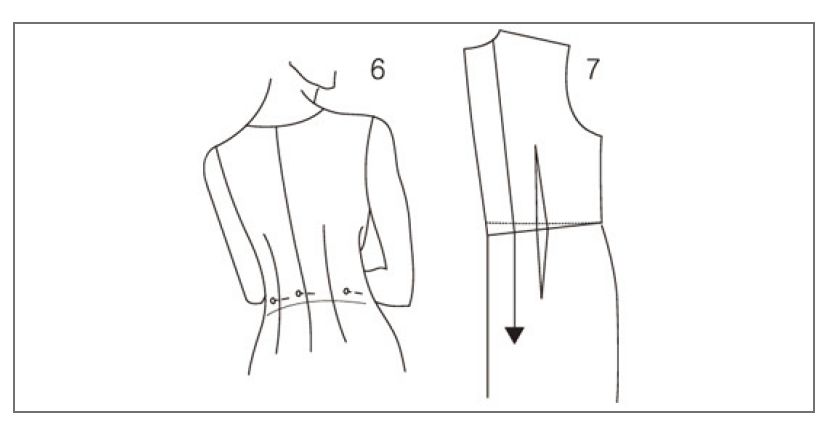
Dress and jacket correction: For clothes that create horizontal pleats below the waist when worn, pin the remaining part of the back waist as shown in <Figure 6> and mark the line on the clothes with tape.
In the case of a style without a waist cut, cut the waist line as shown in <Figure 7> and overlap the top part downwards with the skirt part in the direction of the grain to eliminate any excess volume.
For styles with a waistline, if the garment is finished with a horizontal pleat below the waist, mark the line of excess fabric by pinning the entire fold from one side seam to the other. If necessary, pin the excess fabric along the center seam and darts together.
For styles with a waist seam, after pinning and stitching, transform the paper pattern as follows. Draw a horizontal change line for the excess amount at waist height, then draw a modified line that forms an appropriate curve from the center back to the side seam. After transforming as above, cut out the back together with the center seam.
Tip
For skirts or pants, hip circumference (measured 20 cm below the waist)
Select the clothing size based on the chest circumference (Women: Bust Cir./Men: Chest. Cir.) for dresses, jackets, coats, etc., and adjust the side seam, design seam line, waist circumference, and hip circumference to ensure proportion and balance, if necessary.